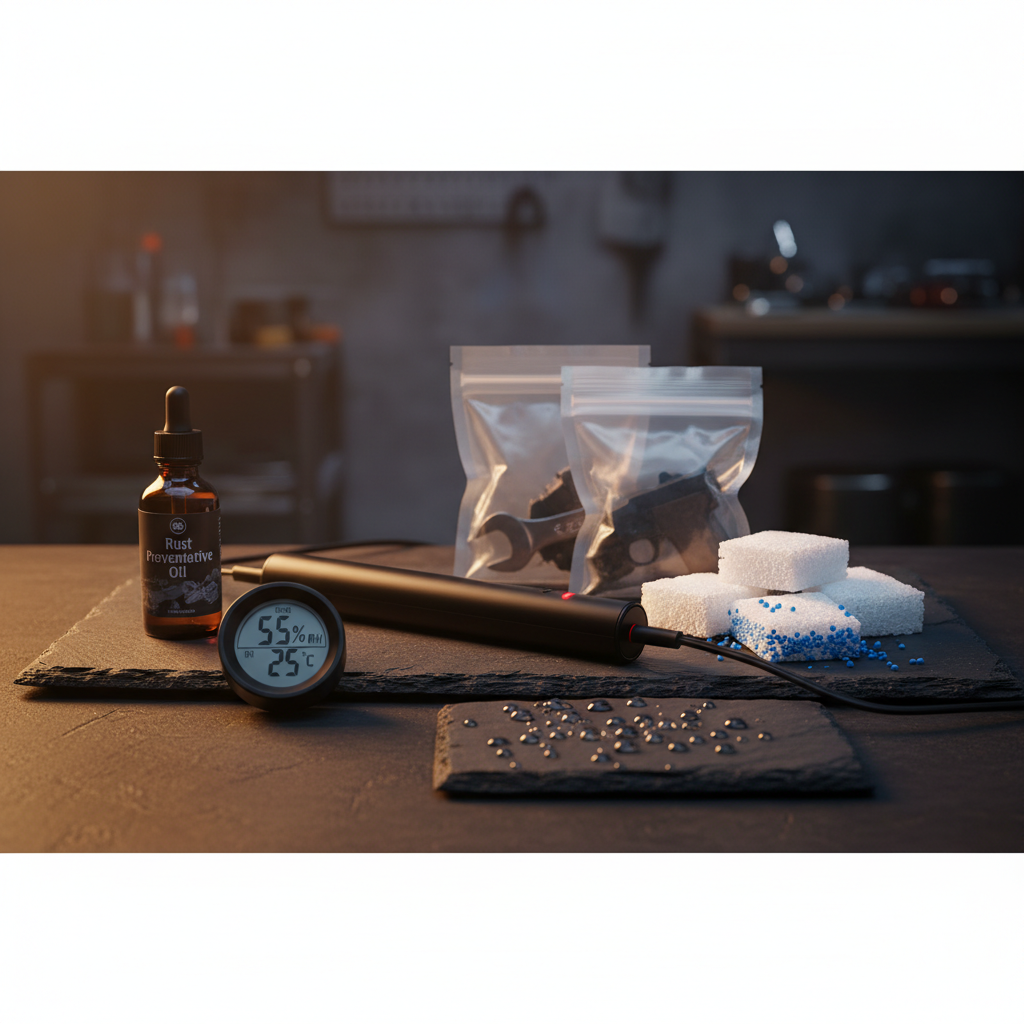
Essential Gear for Humid Climate Gun Owners
Combat rust and corrosion in coastal and humid environments. Dehumidifiers, protective oils, and maintenance routines to keep your firearms in perfect condition despite the moisture.
If you live in a coastal region, the Gulf states, the Pacific Northwest, or anywhere the relative humidity regularly climbs above 60%, your firearms face a relentless enemy: moisture. Rust and corrosion can develop in days under the wrong conditions, damaging finishes, degrading function, and destroying value. The right combination of environmental control and protective products makes all the difference.
Safety Notice
Corrosion is not just cosmetic. Rust inside a barrel or on critical action components can cause dangerous malfunctions, including failures to fire and failures to extract. Regular inspection is a safety issue, not just a maintenance one.
The Humidity Challenge
Humidity does not need to be extreme to cause damage. Steel begins to corrode when relative humidity exceeds about 50%, and the process accelerates rapidly above 60%. In many southern and coastal areas, indoor humidity without climate control routinely reaches 70-80%.
The problem is compounded by several factors unique to firearm storage:
- Fingerprint acids: Sweat contains salts and acids that etch bare metal in hours. A single unwiped fingerprint can leave a permanent rust mark in humid conditions.
- Temperature cycling: When temperatures drop at night, moisture condenses on cold metal surfaces inside safes, a phenomenon called "sweating." This is especially common in garages and exterior wall closets.
- Trapped moisture: Closed safes and cases create sealed environments where humidity can build up, especially if firearms are stored while still warm from shooting or handling.
- Salt air: Coastal environments add salt particles to the air, dramatically accelerating corrosion on any exposed steel surface.
Target Humidity Levels
Humidity Guide for Firearm Storage
- 30-50% RH Ideal range. Minimal corrosion risk. This is your target.
- 50-60% RH Caution zone. Corrosion possible on unprotected steel. Increase inspection frequency.
- 60%+ RH Danger zone. Active corrosion on bare steel. Immediate dehumidification required.
Invest in a Hygrometer
A small digital hygrometer (under $15) placed inside your safe tells you exactly what conditions your firearms are experiencing. Without one, you are guessing. Many gun owners are shocked to discover their safe interior is 20-30% more humid than the room it sits in.
Dehumidification Methods
Electric Rod Dehumidifiers (GoldenRod)
Electric rod dehumidifiers like the GoldenRod work by gently warming the air inside your safe a few degrees above ambient temperature. Warm air holds more moisture and rises, creating a slow convection current that prevents condensation on your firearms. They run continuously, use minimal electricity (about the same as a nightlight), and require zero maintenance.
This is the single most effective step you can take for safe storage in humid climates. If you buy one product from this page, make it a GoldenRod.
Desiccant Packs and Canisters
Silica gel desiccants absorb moisture from the air inside a sealed space. They work well in smaller safes, cases, and cabinets. Rechargeable versions can be dried out in an oven and reused indefinitely. Color-indicating beads turn from orange to green (or blue to pink) when saturated, telling you when to recharge.
Desiccants are best used alongside an electric dehumidifier, not as a replacement. In truly humid environments, a desiccant pack alone will saturate within days and become useless.
VCI (Vapor Corrosion Inhibitor) Products
VCI technology uses special chemicals that emit a protective vapor around metal surfaces. Available as gun socks, drawer liners, zip bags, and paper wraps, VCI products create a microscopic protective layer on steel without any direct contact or oily residue.
VCI gun socks are particularly useful for long guns stored in cabinets. They slip over the entire firearm and continuously protect every surface. Replace them annually for maximum effectiveness.
Our Recommendations
These products form a complete humidity defense system. The GoldenRod handles environmental control, while the lubricants and protectants provide direct surface protection for every firearm you own.
GoldenRod Original Gun Safe Dehumidifier (18")
Best for: Continuous safe dehumidification
Electric heating rod that gently warms the air inside your safe to prevent condensation. Plugs into a standard outlet and runs continuously with minimal electricity. The most reliable and maintenance-free way to control safe humidity.
Pros
- + Set it and forget it
- + Minimal electricity cost
- + Proven technology for decades
Cons
- - Requires electrical outlet near safe
- - Must drill hole in safe for cord
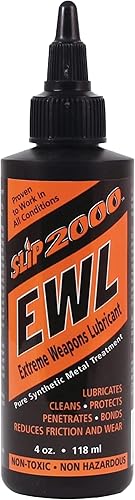
Slip 2000 EWL Extreme Weapons Lubricant
Best for: Long-lasting corrosion protection on metal surfaces
Premium 4oz synthetic lubricant formulated for extreme conditions. Non-toxic, biodegradable formula provides outstanding corrosion protection across a temperature range of -110 degrees F to 350 degrees F. Leaves a lasting protective film.
Pros
- + Superior film strength
- + Extreme temperature range
- + Non-toxic and biodegradable
Cons
- - Higher price than competitors
- - Lubricant only (not a cleaner)
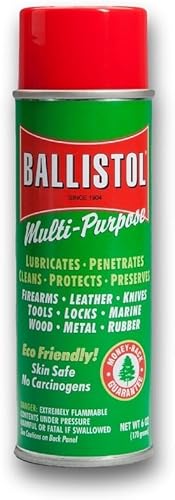
Ballistol Multi-Purpose Aerosol
Best for: All-surface protection including wood and leather
Biodegradable 6oz aerosol that cleans, lubricates, and protects in one step. Safe on wood, leather, plastics, and all metals. German-engineered since 1904, it neutralizes acids from fingerprints and perspiration that accelerate corrosion.
Pros
- + Safe on every material
- + Neutralizes corrosive fingerprint acids
- + Eco-friendly formula
Cons
- - Distinctive smell
- - Not the strongest dedicated cleaner
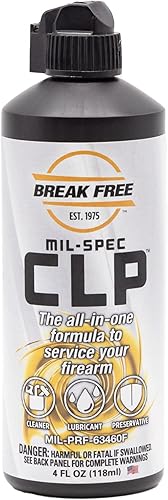
Break-Free CLP-4 Cleaner Lubricant Preservative
Best for: All-in-one maintenance in humid conditions
The military-standard CLP in a 4oz squeeze bottle. Cleans, lubricates, and deposits a long-lasting protective film that displaces moisture and prevents rust. Proven in the harshest environments by armed forces worldwide.
Pros
- + Military-proven corrosion resistance
- + Displaces moisture on contact
- + Clean, lube, and protect in one step
Cons
- - Not specialized for heavy fouling
- - Needs more frequent reapplication in extreme humidity
Key Considerations for Humid Climates
Maintenance Frequency
In humid climates, the standard "clean after every range trip" advice is not enough. You should also:
- Wipe down after handling: Every time you pick up a firearm, wipe it with a lightly oiled cloth before returning it to storage
- Monthly inspections: Pull each firearm out monthly and check for early rust spots, especially in hard-to-see areas like under the extractor, inside the trigger guard, and along barrel channels
- Reapply protectant quarterly: Even with a dehumidifier, reapply a light coat of CLP or protectant oil every 3 months
- Check desiccants weekly: If you use silica gel packs, check indicator colors weekly and recharge as needed
Storage Mistakes That Accelerate Corrosion
- Foam-lined cases: Open-cell foam traps and holds moisture against metal. Never use foam cases for long-term storage in humid environments
- Leather holsters and slings: Leather absorbs moisture and can transfer tanning chemicals that corrode bluing. Remove leather accessories before storage
- Garage and shed storage: Uninsulated spaces experience extreme temperature swings that cause condensation. Keep safes in climate-controlled rooms
- Neglecting the bore: The barrel interior is especially vulnerable. A lightly oiled bore patch after every handling prevents internal pitting
Early Rust Response
If you catch surface rust early (orange discoloration on blued or parkerized surfaces), it can often be removed without permanent damage. Apply a generous amount of penetrating oil (Ballistol works well here), let it soak for 15 minutes, then gently rub with 0000 steel wool or a brass brush. Follow up with a fresh coat of protectant. Deeper pitting requires professional refinishing.
The Complete Humid Climate Defense
For best results, combine multiple layers: a GoldenRod dehumidifier in your safe, VCI gun socks on each firearm, a rechargeable desiccant canister as backup, a hygrometer to monitor conditions, and a quality CLP for regular wipe-downs. Together, these create a system that protects even in the most aggressive coastal environments.
Related Resources
- Oils, Solvents & Lubricants Guide →
- Corrosion Prevention Guide →
- Wear & Inspection Guide →
- Storage & Safes Buying Guide →
Looking for more options?
Affiliate Disclosure: FirearmCharm.com is a participant in the Amazon Services LLC Associates Program. We may earn a commission from qualifying purchases at no additional cost to you. Our recommendations are based on thorough research and are not influenced by commission rates.