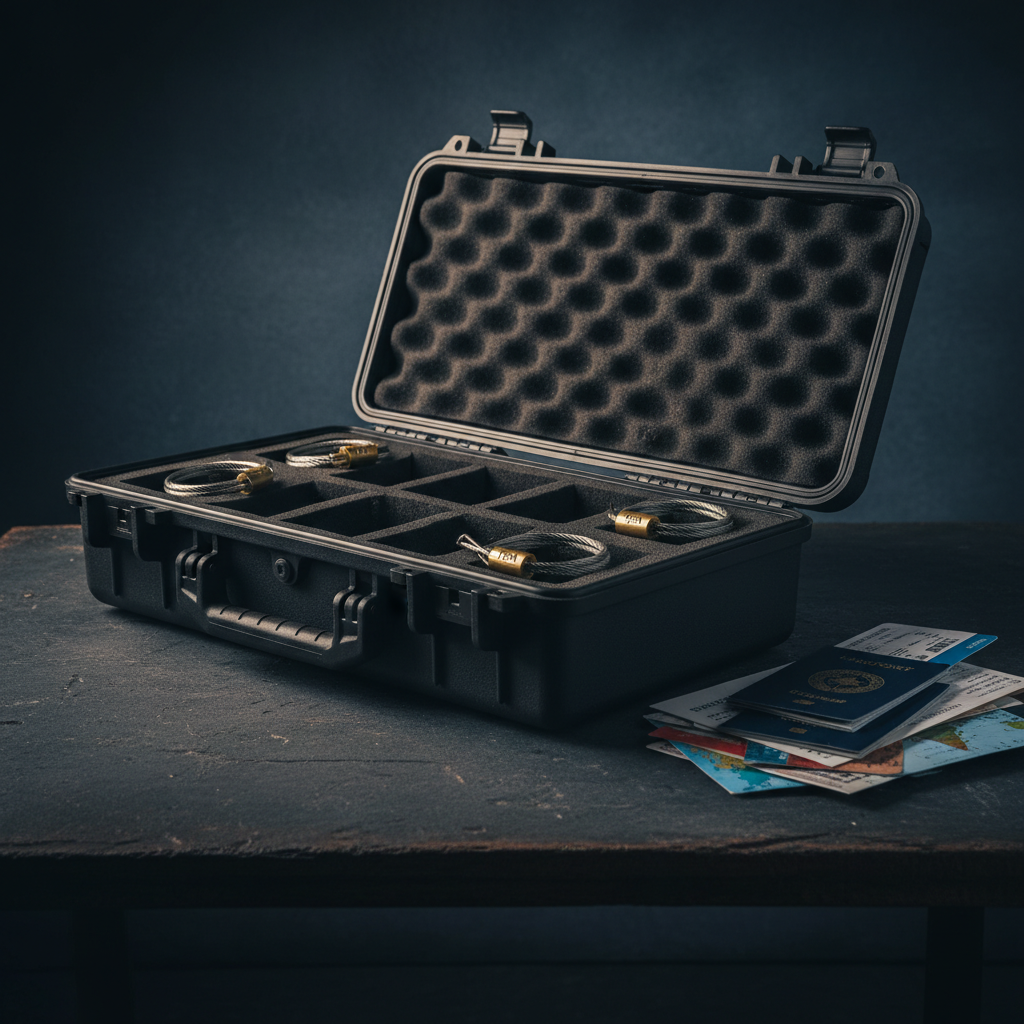
Transport & Travel Guidelines
How to safely and legally transport firearms by vehicle, air, and across state lines. Covers TSA rules, FOPA protections, case requirements, and best practices.
Transporting firearms responsibly requires more than just putting them in a bag and driving to the range. Federal, state, and local laws create a patchwork of regulations that every gun owner must navigate. This comprehensive guide covers vehicle transport, air travel with the TSA, interstate travel under FOPA, and the gear you need to stay safe and legal.
Important Safety Warning
This guide provides general information, not legal advice. Firearm transport laws vary significantly by state, county, and municipality. Always verify current laws for every jurisdiction you will travel through—not just your origin and destination. When in doubt, consult a qualified attorney licensed in the relevant jurisdiction.
The Golden Rules of Firearm Transport
Regardless of where you're traveling or how you're getting there, these principles apply universally:
- Unloaded. Remove all ammunition from the chamber and magazine.
- Cased. Place the firearm in a suitable container—hard cases for maximum protection and legal compliance.
- Locked. Secure the case with a quality lock. For air travel, use TSA-approved non-TSA-accessible locks.
- Separated. Keep ammunition stored separately from the firearm when possible, especially where required by law.
- Inaccessible. In a vehicle, firearms should be in the trunk or the area farthest from the passenger compartment.
Vehicle Transport
General Best Practices
Whether you're heading to the range, a hunting trip, or moving residences, these practices keep you safe and on the right side of the law:
- Trunk is king: If your vehicle has a trunk, use it. This is the most universally accepted placement.
- SUVs and trucks: Use the cargo area farthest from the driver. A locked case provides the legal separation many states require.
- Unloaded and cased: Even in permissive states, this is the safest practice during transport.
- Ammunition separation: Some states require ammunition to be in a separate container from the firearm. Do this everywhere to be safe.
- Glove box and console: Even where legal, these locations are generally a poor choice for transport. They're accessible, visible during stops, and easily stolen.
Law Enforcement Encounters
If stopped by law enforcement while transporting firearms, keep your hands visible, inform the officer if your state requires disclosure, and follow all instructions. Never reach toward a firearm without explicit permission. Cooperate fully and remain calm.
Choosing a Vehicle Transport Case
The right case depends on your needs:
- Soft cases: Lightweight, affordable, fine for short trips to the range. Limited protection against impacts.
- Hard cases: Required for air travel, recommended for long trips. Look for crush-proof construction, pressure equalization valves, and padlock-compatible latches.
- Range bags: Ideal for handguns and accessories. A dedicated range bag keeps everything organized and ready to go.
Securing Firearms in the Vehicle
Beyond casing, consider how to prevent movement and theft:
- Use non-slip mats or cargo straps to prevent cases from sliding
- Cable locks can secure cases to vehicle anchor points
- Never leave firearms visible through windows—even in cases
- Don't leave firearms in vehicles longer than necessary, especially in extreme heat or cold
Interstate Travel: The Firearm Owners Protection Act (FOPA)
What FOPA Provides
The Firearm Owners Protection Act of 1986 (18 U.S.C. § 926A) provides a federal safe passage provision for lawful firearm transport across state lines. Under FOPA:
- You may transport a firearm through any state where you would otherwise be in violation
- The firearm must be unloaded and not readily accessible
- The firearm must be legal at both your origin and your destination
- You must be traveling—not stopping for extended periods in restrictive states
FOPA Requirements
| Requirement | Details |
|---|---|
| Legal at origin | You must be legally allowed to possess the firearm where your trip begins |
| Legal at destination | You must be legally allowed to possess the firearm at your final destination |
| Unloaded | Firearm must be completely unloaded—chamber and magazine |
| Not readily accessible | Locked trunk or locked container not accessible from the passenger compartment |
| Ammunition separate | Ammunition stored separately from the firearm or in a locked container |
| Continuous travel | Brief stops (gas, food, restrooms) are acceptable; overnight stays in restrictive states may void protection |
Important Safety Warning
FOPA has significant limitations. Some states—notably New York and New Jersey—have historically arrested and prosecuted travelers despite FOPA protections. FOPA is an affirmative defense, meaning you may still be arrested and must prove compliance in court. If your route passes through restrictive states, plan carefully and consider alternative routes.
Planning an Interstate Trip
- Research every state on your route: Not just origin and destination, but every state you'll pass through.
- Check magazine capacity laws: Some states restrict magazine capacity regardless of FOPA.
- Verify firearm type legality: Certain states ban specific types of firearms outright.
- Plan fueling and rest stops: Minimize stops in restrictive states.
- Carry documentation: Keep your license, registration (where applicable), and purchase receipts accessible.
- Consider shipping instead: For valuable firearms or trips through very restrictive states, shipping via an FFL may be simpler and safer.
Air Travel with Firearms
TSA Requirements
The Transportation Security Administration has specific, non-negotiable rules for flying with firearms. Violations can result in fines up to $15,000 and criminal charges:
- Checked baggage only. Firearms may never be carried on. Period.
- Unloaded. No ammunition in the chamber, cylinder, or attached magazine.
- Hard-sided case. The case must be lockable and completely secure the firearm from unauthorized access.
- Locked. You must use locks that only you can open. Do NOT use TSA-accepted locks—you must be the sole person able to open the case.
- Declaration. You must declare the firearm at the airline check-in counter. You'll sign a declaration card that goes inside the case.
TSA Lock Rule
This is counterintuitive: for regular luggage, TSA wants accessible locks. For firearm cases, TSA requires locks that only you can open. Use quality padlocks—not TSA-accessible combination locks. The TSA will page you if they need to inspect the case, and you must be present to open it.
Ammunition Rules for Air Travel
- Ammunition must be in checked baggage (never carry-on)
- Must be in original packaging or a container designed for ammunition (fiber, wood, or metal boxes with dividers)
- Ammunition may be packed in the same hard case as the firearm if stored in a separate compartment or container
- Most airlines limit ammunition to 11 pounds (5 kg) per passenger
- Loose rounds in a bag or pocket are not acceptable
Step-by-Step Air Travel Process
Flying with a Firearm: Checklist
- 1. Check airline policies
Each airline may have additional requirements beyond TSA rules. Review their specific firearms policy, fees, and any quantity limits. - 2. Verify destination laws
Confirm your firearm is legal at your destination and any layover cities. - 3. Pack properly
Unload completely. Place in a hard-sided, lockable case. Secure with non-TSA padlocks. Pack ammunition in approved containers. - 4. Arrive early
Allow extra time at check-in. You must declare the firearm in person—this can't be done at a kiosk or online. - 5. Declare at the counter
Tell the agent you need to declare a firearm. You'll fill out and sign a declaration card, which goes inside the case. - 6. TSA inspection
Your case may be physically inspected by TSA. Stay nearby in case you're paged to open the case. After inspection, you'll re-lock it. - 7. Retrieve at destination
Firearms are typically returned at the airline's baggage service office, not the normal carousel. Verify with your airline.
Choosing an Air Travel Case
For air travel, your case is your most important piece of equipment:
- Pelican-style cases: Industry standard. Waterproof, crush-proof, dustproof. The Pelican 1750 fits most rifles with optics.
- Plano All Weather series: Excellent value with similar protection at a lower price point.
- Custom foam: Pick-and-pluck foam allows you to custom-fit your specific firearms and accessories.
- Padlock hasps: Look for cases with integrated padlock holes, not flimsy latches that rely on zipper locks.
Pro Tip: Multiple Padlocks
Use padlocks on every available hasp point. A case with three padlock holes should have three padlocks. This prevents the case from being opened even if one lock is compromised. Quality brass padlocks from a hardware store work perfectly—they don't need to be expensive.
Special Transport Situations
Hunting Trips
Hunting adds layers of complexity to transport:
- Verify hunting license requirements at your destination
- Some states allow loaded transport to and from hunting areas—know the exact rules
- Consider ATV/UTV transport laws if hunting in remote areas
- International hunting trips require export/import permits and extensive paperwork
Moving to a New State
Relocating requires careful planning:
- Research your new state's laws before you move
- Some firearms legal in your current state may be banned in your new state
- Registration requirements vary—some states require registration within days of establishing residency
- Consider selling or transferring restricted items before moving rather than risking possession charges
Public Transit, Rideshares, and Taxis
These situations are often overlooked:
- Public transit: Many systems prohibit firearms entirely. Check before boarding.
- Rideshares: Uber and Lyft both prohibit firearms in vehicles. Enforcement varies, but violations can result in deactivation.
- Taxis: Policies vary by city and company. Ask before loading a cased firearm.
Transport Case Comparison
| Feature | Soft Case | Basic Hard Case | Premium Hard Case |
|---|---|---|---|
| Impact Protection | Minimal | Good | Excellent |
| Waterproof | No | Varies | Yes |
| Padlock Compatible | Rarely | Usually | Yes |
| TSA Air Travel | No | If lockable | Yes |
| Weight | 1-3 lbs | 5-10 lbs | 10-20 lbs |
| Price Range | $15-50 | $40-100 | $100-350 |
| Best For | Quick range trips | Regular transport | Air travel, long trips |
Common Transport Mistakes
- Assuming your carry permit covers transport: A concealed carry permit does not necessarily mean you can transport firearms the same way across state lines. Transport rules and carry rules are different.
- Not checking magazine laws: You may be legal to carry the firearm but illegal with a standard-capacity magazine in certain states.
- Stopping overnight in restrictive states: FOPA's safe passage protection is designed for continuous travel. Extended stops can void the protection.
- Using TSA-accessible locks on firearm cases: For air travel, you need locks that only you can open—not TSA-accepted locks.
- Forgetting to declare at check-in: Failing to declare a firearm for air travel is a federal offense with severe penalties.
- Leaving firearms in hotel safes: Hotel safes are not secure storage. Keep your locked case with you or use the hotel's secure storage if available.
Documentation Tip
Keep a folder with copies of your firearm purchase receipts, any applicable permits or licenses, and a printed summary of the transport laws for your route. In the rare event of a law enforcement encounter, having organized documentation demonstrates responsibility and can resolve questions quickly.
Pre-Trip Checklist
Before You Travel
- ☐ Firearm unloaded—chamber, magazine, and cylinder verified empty
- ☐ Firearm placed in appropriate case (hard-sided for air travel)
- ☐ Case locked with quality padlocks
- ☐ Ammunition in separate, approved container
- ☐ Laws verified for origin, destination, and all states in between
- ☐ Magazine capacity laws checked for each jurisdiction
- ☐ Airline-specific policies reviewed (if flying)
- ☐ Documentation and permits accessible
- ☐ Case labels with your contact information (not firearm details)
- ☐ Route planned to minimize time in restrictive jurisdictions
Related Resources
Affiliate Disclosure: FirearmCharm.com is a participant in the Amazon Services LLC Associates Program. We may earn a commission from qualifying purchases at no additional cost to you. Our recommendations are based on thorough research and are not influenced by commission rates.