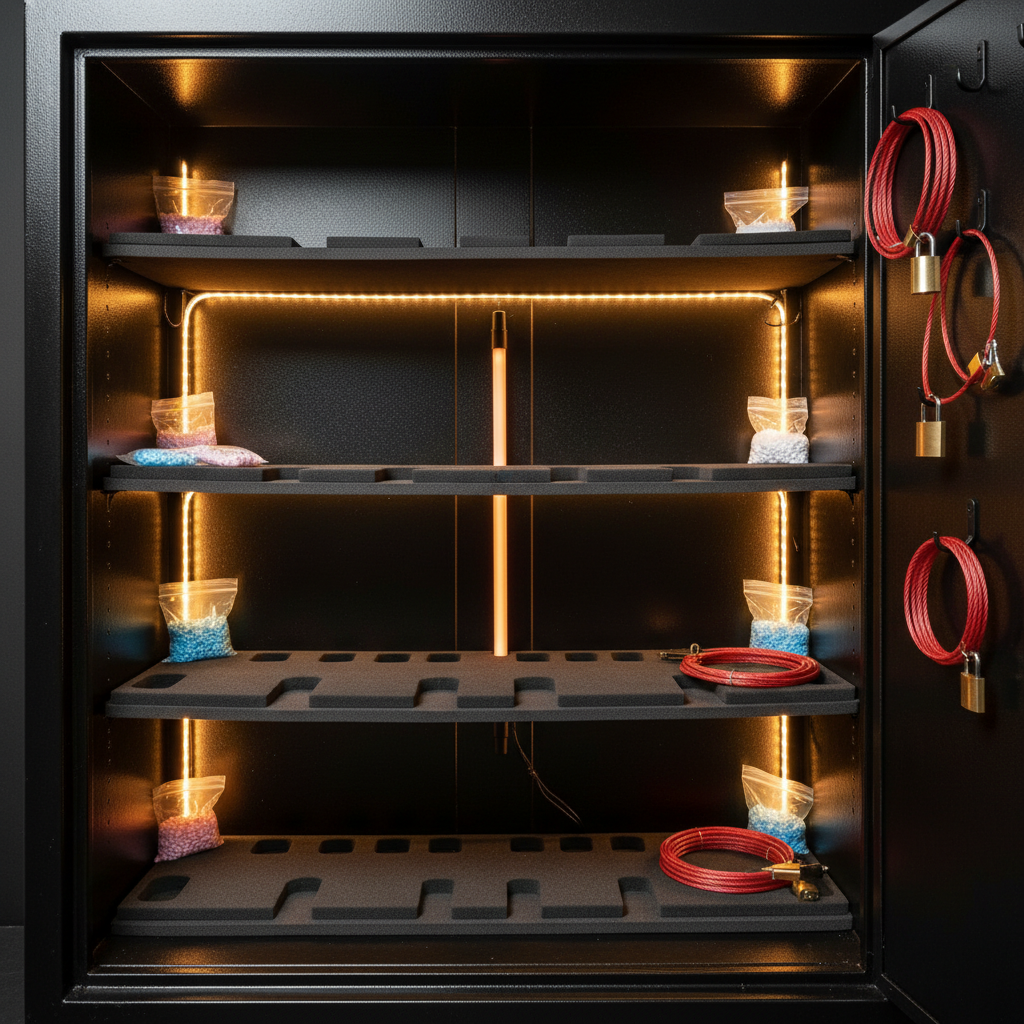
Storage Best Practices
Complete guide to safe firearm storage: gun safe placement, humidity control, fire protection, organization methods, and long-term preservation of your investment.
Proper storage is one of the most important responsibilities of firearm ownership. It protects your investment, prevents unauthorized access, and ensures your firearms remain in optimal condition. This guide covers everything you need to know.
Important Safety Warning
Secure storage saves lives. Unsecured firearms contribute to accidents, youth suicides, and theft. Every firearm owner has a moral and often legal obligation to store firearms securely.
The Three Pillars of Storage
1. Security (Access Control)
The primary purpose of storage is preventing unauthorized access—especially by children, but also by intruders, visitors, and anyone who shouldn't have access.
- Gun safes: Thickest steel, multiple locking bolts, pry-resistant doors
- Quick-access safes: Rapid access for home defense while still securing
- Lock boxes: Basic security, portable, affordable entry point
- Trigger/cable locks: Last resort, not true secure storage
2. Protection (Climate Control)
Firearms are precision instruments susceptible to environmental damage. Proper storage protects against:
- Humidity: Causes rust and corrosion
- Temperature swings: Cause condensation
- Dust and debris: Can affect function
- UV exposure: Damages stocks and finishes over time
3. Organization (Accessibility)
Good organization prevents damage from firearms bumping together and makes inspection and maintenance easier.
Safe Selection
Fire Rating
Fire ratings indicate how long contents stay below damaging temperatures:
- 30 minutes at 1200°F: Entry-level protection
- 60 minutes at 1400°F: Good protection
- 90+ minutes: Excellent protection for valuable collections
Steel Gauge
Lower gauge numbers mean thicker steel:
- 10-gauge: Premium security
- 12-gauge: Good security
- 14-gauge: Standard entry-level
Lock Types
- Electronic keypads: Fast access, programmable, requires batteries
- Biometric: Fastest access, can fail in adverse conditions
- Mechanical (dial): No batteries, extremely reliable, slower
- Redundant locks: Best safes offer multiple access methods
Climate Control
Humidity Control
Target 30-50% relative humidity in your storage area:
- Dehumidifier rods: Electric heating elements that keep air circulating
- Desiccants: Silica gel or rechargeable units that absorb moisture
- Room dehumidifiers: For basement or garage installations
Signs of Humidity Problems
- Surface rust or orange discoloration
- Musty smell in safe
- Condensation on metal surfaces
- Corrosion on springs or internal parts
Safe Placement
- Ground floor: Easier installation, less structural concern
- Climate-controlled areas: Avoid unheated garages or damp basements if possible
- Concealed but accessible: Balance security with practical access
- Anchored: Bolt to floor and/or wall
Children in the Home
If children ever enter your home—whether residents or visitors—secure storage is mandatory:
- All firearms in locked storage at all times
- Combination/keys never accessible to children
- Education supplements but never replaces secure storage
- Assume curious children will explore
Free Safety Resources
Project ChildSafe offers free gun locks and safety education materials. Visit ProjectChildSafe.org →
Inspection Schedule
| Frequency | Task |
|---|---|
| Monthly | Visual inspection of stored firearms, check dehumidifier function |
| Quarterly | Replace/recharge desiccants, test safe batteries, light clean if needed |
| Annually | Full inspection, check door seals, verify lock function, deep clean firearms |
Related Resources
Affiliate Disclosure: FirearmCharm.com is a participant in the Amazon Services LLC Associates Program. We may earn a commission from qualifying purchases at no additional cost to you. Our recommendations are based on thorough research and are not influenced by commission rates.