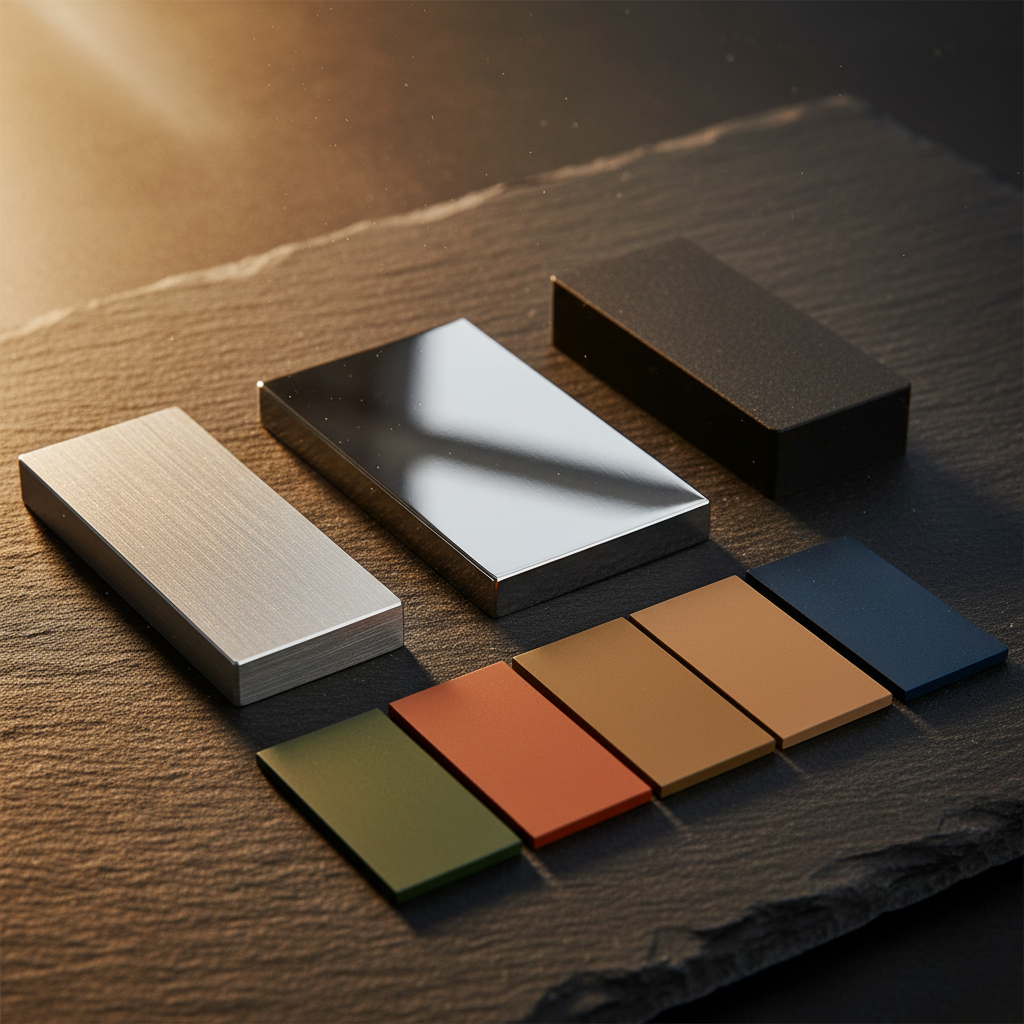
Materials & Durability Guide
Comprehensive guide to firearm materials: steel alloys, aluminum, polymers, and protective finishes. Understand how material choices affect weight, durability, and corrosion resistance.
Understanding the materials used in firearms and accessories is essential for making informed purchasing decisions, performing proper maintenance, and recognizing quality. This guide provides a deep dive into the steels, aluminum alloys, polymers, and protective finishes you will encounter. Knowing what your firearm is made of directly informs how you should care for it. Estimated reading time: 18 minutes.
Important Safety Warning
Material specifications matter for safety. Pressure-bearing components like barrels, bolts, and receivers must be manufactured from appropriate materials with proper heat treatment. Never use parts from unknown or unverified sources in critical applications. A barrel or bolt failure can cause serious injury or death.
Steel Alloys
Steel is the foundational material of firearms. It provides the strength and hardness required to contain chamber pressures, resist wear from thousands of rounds, and maintain precise dimensions over the life of the firearm. Not all steels are equal, and the specific alloy and heat treatment determine a component's performance characteristics.
AISI 4140 Chrome-Molybdenum Steel
4140 is one of the most widely used barrel and receiver steels in the industry. It is a medium-carbon, chromium-molybdenum alloy steel offering an excellent balance of strength, toughness, and machinability.
- Carbon content: ~0.40%, providing good hardness when heat treated
- Chromium and molybdenum: Improve hardenability and strength
- Typical hardness: 28-32 HRC in barrel applications
- Common uses: Barrels, receivers, bolt carriers, many structural components
- Barrel life: Excellent for most calibers; 20,000+ rounds in moderate calibers
4140 is the workhorse of the firearms industry. It machines well, responds predictably to heat treatment, and provides more than adequate strength for virtually all small arms applications. It is the standard against which other barrel steels are compared.
AISI 4150 Chrome-Molybdenum Steel
4150 is identical to 4140 except for a higher carbon content (~0.50% vs ~0.40%). This seemingly small difference has meaningful effects:
- Higher hardness potential: Can achieve 30-35+ HRC, improving wear resistance
- Improved barrel life: The additional hardness resists throat erosion better under sustained fire
- Slightly more difficult to machine: Higher carbon means harder material to work with
- The military standard: MIL-B-11595E specifies 4150 for M16/M4 barrels (often referenced as "mil-spec")
For the typical shooter, the difference between a 4140 and 4150 barrel is negligible. The distinction becomes meaningful in sustained rapid-fire scenarios such as military or law enforcement use, where 4150's superior heat resistance provides measurably longer barrel life.
17-4 PH Stainless Steel
17-4 PH (Precipitation Hardened) is a martensitic stainless steel containing approximately 17% chromium and 4% nickel, with copper additions that allow precipitation hardening.
- Corrosion resistance: Significantly superior to chrome-moly steels
- Strength: Can achieve tensile strengths exceeding 190 ksi when properly aged
- Common uses: Bolt faces, firing pins, extractors, small structural components, some slides
- Heat treatment: Solution treated and then aged at specific temperatures to achieve target hardness
17-4 PH is not commonly used for barrels due to cost and machinability challenges, but it excels in components requiring both high strength and corrosion resistance. Many premium bolt components and extractors are manufactured from 17-4 PH.
416 Stainless Steel
416 stainless is the most common stainless barrel steel. It is a free-machining martensitic stainless steel with excellent machinability, good hardness, and moderate corrosion resistance.
- Machinability: The best of any stainless steel, making it ideal for precision barrel work
- Accuracy potential: Superior surface finish quality leads to excellent accuracy
- Barrel life: Generally shorter than chrome-moly equivalents due to lower hardness
- Corrosion resistance: Better than chrome-moly, but lower than 17-4 PH or 300-series stainless
416 stainless is the preferred choice for match-grade and custom barrels where accuracy is paramount. The trade-off is reduced barrel life compared to 4150 chrome-moly, which is typically acceptable for precision shooters who prioritize accuracy over round count.
Steel Alloy Comparison
| Property | 4140 CrMo | 4150 CrMo | 17-4 PH SS | 416 SS |
|---|---|---|---|---|
| Hardness (HRC) | 28-32 | 30-35 | 33-44 | 28-35 |
| Corrosion Resistance | Low | Low | High | Moderate |
| Barrel Life | Very Good | Excellent | N/A (not used for barrels) | Good |
| Machinability | Good | Good | Moderate | Excellent |
| Cost | Low | Low-Moderate | High | Moderate |
| Typical Use | Barrels, receivers | Mil-spec barrels | Bolts, small parts | Match barrels |
Aluminum Alloys
Aluminum alloys are used extensively in firearm construction where weight savings are critical and the component does not directly bear chamber pressures. Upper and lower receivers, handguards, scope mounts, and various accessories are commonly manufactured from aluminum.
6061-T6 Aluminum
6061-T6 is one of the most versatile and widely used aluminum alloys in general manufacturing, and it is extremely common in firearm accessories.
- Composition: Aluminum with magnesium and silicon as primary alloying elements
- Tensile strength: ~45,000 psi (T6 temper)
- Weight: Approximately one-third the weight of steel
- Machinability: Excellent; machines cleanly and holds tolerances well
- Corrosion resistance: Good natural resistance, excellent when anodized
- Common uses: Handguards, scope rings, accessories, some lower receivers, trigger guards
6061-T6 is perfectly adequate for most accessory applications. It is easy to manufacture, cost-effective, and provides a good strength-to-weight ratio. For non-structural accessories like handguards and scope rings, it is the standard choice.
7075-T6 Aluminum
7075-T6 is a zinc-alloyed aluminum that delivers significantly higher strength than 6061, approaching the strength of many steels while maintaining aluminum's weight advantage.
- Tensile strength: ~83,000 psi (T6 temper), nearly double that of 6061
- Zinc and copper alloying: Provide exceptional strength but reduce corrosion resistance
- The receiver standard: 7075-T6 is the standard for AR-15/M4 upper and lower receivers
- Cost: Higher than 6061 due to material cost and machining difficulty
- Corrosion resistance: Lower than 6061 in raw form; anodizing is strongly recommended
For structural components like receivers that must withstand repeated stress, 7075-T6 is the clear choice. Its higher strength provides a significant safety margin. If you see a receiver advertised as 6061, it is a lower-tier product; functional, but not meeting the industry standard for that application.
Safety Notice
Receiver material matters. While 6061 receivers exist and generally function, 7075-T6 is the industry and military standard for AR-pattern receivers. The higher strength provides important safety margins, especially around the takedown pin and buffer tube threading areas where stress concentrates.
Aluminum Alloy Comparison
| Property | 6061-T6 | 7075-T6 |
|---|---|---|
| Tensile Strength | ~45,000 psi | ~83,000 psi |
| Yield Strength | ~40,000 psi | ~73,000 psi |
| Weight (relative) | ~0.098 lb/in3 | ~0.101 lb/in3 |
| Corrosion Resistance | Good | Moderate (needs anodizing) |
| Machinability | Excellent | Good |
| Cost | Lower | Higher |
| Best Use | Handguards, accessories, scope mounts | Receivers, structural components |
Polymers
Polymer materials have become indispensable in modern firearms design. From frames and stocks to magazines and handguards, engineering plastics offer unique advantages that metal cannot match.
Glass-Filled Nylon (PA6, PA66)
Nylon 6 and Nylon 66 reinforced with glass fibers form the backbone of most firearm polymer applications. The glass fiber content (typically 20-33%) dramatically improves the material's structural properties.
- Tensile strength: 15,000-25,000 psi depending on glass content
- Temperature range: Functional from -40 degrees F to 300+ degrees F
- Chemical resistance: Excellent resistance to solvents, oils, and cleaning agents
- Weight: Approximately one-seventh the weight of steel
- Common uses: Magazine bodies, lower receivers (AR platform), trigger guards, grip panels
DuPont Zytel (Nylon 66-Based)
Zytel is a brand name from DuPont for a family of nylon resins widely used in the firearms industry. It became famous as the frame material for Glock pistols and has since become an industry standard.
- Impact resistance: Exceptional energy absorption; survives drops that would dent metal
- Dimensional stability: Maintains precise dimensions across temperature ranges
- Fatigue resistance: Can withstand millions of flex cycles without failure
- Self-lubricating: Lower coefficient of friction reduces wear on mating surfaces
Fiber-Reinforced Polymer Composites
Advanced composites using carbon fiber or high-modulus glass in polymer matrices are increasingly appearing in premium accessories:
- Carbon fiber handguards: Extreme stiffness with minimal weight and excellent heat dissipation
- Composite stocks: Weather-proof alternatives to traditional wood
- Strength-to-weight: Can exceed both aluminum and steel in specific applications
- Cost: Significantly higher than standard polymers or metals
Polymer Care
Polymer components require minimal maintenance compared to metal. They do not need lubrication, are immune to rust, and clean easily with soap and water. Avoid prolonged exposure to acetone or MEK (methyl ethyl ketone), which can attack some polymer types. Most standard firearm solvents are safe.
Protective Finishes
The finish applied to a metal component is often more important to its longevity than the base metal itself. A good finish protects against corrosion, reduces friction, and improves aesthetics. Understanding finishes helps you select products wisely and maintain them properly.
Hot Bluing
Bluing is the oldest and most traditional firearm finish. It creates a controlled layer of magnetite (Fe3O4) on the steel surface through a chemical conversion process involving hot alkaline salt solutions.
- Corrosion protection: Minimal; bluing provides appearance more than protection
- Appearance: Classic deep blue-black finish prized for its aesthetic appeal
- Thickness: Extremely thin; does not affect dimensions or tolerances
- Durability: Wears with handling and use; requires regular oiling
- Maintenance: Must be kept oiled to prevent rust; wipe down after every handling
- Cost: Moderate for quality hot bluing; cold bluing touch-up is inexpensive
Bluing remains popular for its traditional appearance, particularly on classic designs and hunting rifles. It demands more attentive maintenance than modern finishes. If you own a blued firearm, regular application of a light oil like Ballistol or a quality CLP is essential.
Cerakote
Cerakote is a polymer-ceramic composite coating applied by spray and then cured in an oven. It has rapidly become the most popular finish for modern firearms and accessories.
- Corrosion protection: Exceptional; among the best available for firearms
- Thickness: Approximately 0.001 inches, thin enough for most applications
- Hardness: 9H pencil hardness rating
- Chemical resistance: Resistant to solvents, fuels, and most cleaning agents
- Colors: Available in virtually any color or pattern; popular for custom builds
- Self-lubricating: Low coefficient of friction improves cycling
- Temperature: Rated to 1,200 degrees F (H-series)
Cerakote's combination of protection, durability, and customization has made it the go-to finish for both factory and aftermarket applications. It can be applied to steel, aluminum, titanium, and even polymers.
Nitride / Melonite / QPQ
Nitride treatments (also sold under names like Melonite, Tenifer, and QPQ) are thermochemical diffusion processes that harden the surface of steel by infusing nitrogen into the material. Unlike coatings, nitriding changes the surface of the steel itself.
- Surface hardness: 65-72 HRC equivalent, extremely hard
- Corrosion resistance: Excellent; often exceeds chrome plating
- Dimensional change: Virtually none, making it ideal for precision parts
- Lubricity: Improved surface smoothness reduces friction
- Durability: Because it is not a coating but a surface treatment, it cannot chip, peel, or flake
- Appearance: Matte black; less customizable than Cerakote
Nitride has become the standard treatment for barrels and bolt carrier groups in the AR platform. Its combination of hardness, corrosion resistance, and zero dimensional change makes it technically superior to chrome lining for most applications.
Parkerizing (Manganese or Zinc Phosphate)
Parkerizing creates a matte gray or green-gray phosphate conversion coating. It has been the standard military finish since World War II.
- Corrosion protection: Good when oiled; the porous surface absorbs and retains oil
- Appearance: Matte gray or green-gray, non-reflective
- Wear resistance: Moderate; wears at contact points
- Oil retention: The porous surface is its greatest advantage, acting as an oil reservoir
- Compatibility: Only works on ferrous metals (steel, iron)
- Military standard: MIL-DTL-16232 specifies requirements for military Parkerizing
Anodizing (Type II and Type III)
Anodizing is an electrochemical process that creates a hard aluminum oxide layer on aluminum surfaces. It is the standard finish for aluminum firearm components.
- Type II (standard): 0.0002-0.001 inch thickness, good corrosion protection, takes dyes well
- Type III (hard anodizing): 0.001-0.002 inch thickness, extremely hard (65-70 RC equivalent), excellent wear resistance
- MIL-A-8625 Type III: The military specification for hard anodizing; the standard for AR receivers
- Color: Type III typically produces a dark gray to black finish; can be dyed
- Durability: Very hard and wear-resistant; scratches reveal bright aluminum underneath
Finish Comparison
| Finish | Corrosion Protection | Wear Resistance | Maintenance | Applies To |
|---|---|---|---|---|
| Hot Bluing | Low | Low | High (regular oiling) | Steel only |
| Cerakote | Excellent | Very Good | Low | Any metal, polymer |
| Nitride / QPQ | Excellent | Excellent | Low | Steel only |
| Parkerizing | Good (when oiled) | Moderate | Moderate | Steel only |
| Type III Anodize | Very Good | Excellent | Low | Aluminum only |
How Material Choices Affect Your Firearm
Weight
Material density directly impacts the overall weight of your firearm and accessories. Here is how common materials compare:
| Material | Density (lb/in3) | Relative Weight |
|---|---|---|
| Steel (4140/4150) | 0.284 | Baseline (1.0x) |
| Stainless Steel (17-4 PH) | 0.282 | ~1.0x |
| Titanium (Grade 5) | 0.160 | ~0.56x |
| Aluminum (7075) | 0.101 | ~0.36x |
| Glass-Filled Nylon | 0.052 | ~0.18x |
| Carbon Fiber Composite | 0.058 | ~0.20x |
This is why a polymer-framed pistol can be significantly lighter than an all-steel design, and why carbon fiber handguards command a premium. Every ounce matters for a firearm you carry, whether hunting, competing, or for personal defense.
Corrosion Resistance
Your environment and usage patterns should influence material preferences:
- Humid or coastal environments: Prioritize stainless steel, Cerakote, or nitride finishes
- Dry, arid climates: Chrome-moly with standard finishes works well
- Concealed carry (body contact): Sweat is highly corrosive; stainless or polymer frames recommended
- Safe-stored collectibles: Bluing is fine with proper climate control and maintenance
Durability and Service Life
Different materials wear at different rates. Understanding this helps you anticipate maintenance and replacement needs:
- Chrome-lined barrels: Extended life, especially with military-grade ammunition; 20,000+ rounds
- Nitride-treated barrels: Comparable to chrome lining for accuracy and life; easier manufacturing
- Stainless match barrels: Peak accuracy but typically shorter life in hot calibers
- Polymer frames: Essentially unlimited life under normal use conditions
- Aluminum receivers: Can wear at rail contact points over very high round counts
Matching Materials to Use
A hunting rifle used a few hundred rounds per year in controlled conditions does not need the same materials as a competition pistol seeing 10,000 rounds annually. Choose materials and finishes that match your actual usage, not the most extreme scenario you can imagine. Smart material selection saves money without sacrificing the performance that matters to you.
Caring for Different Materials
Steel Components
- Keep oiled or treated with a quality CLP, especially blued or Parkerized surfaces
- Nitride and Cerakote finishes need minimal maintenance but still benefit from lubrication at contact points
- Remove fouling and moisture promptly to prevent surface degradation
Aluminum Components
- Anodized surfaces are durable but can scratch; scratches expose bare aluminum to corrosion
- Use appropriate lubricants at aluminum-to-steel contact points to prevent galvanic corrosion
- Avoid harsh alkaline cleaners that can attack anodizing
Polymer Components
- Clean with mild soap and water or standard firearm solvents
- Avoid acetone, MEK, and aggressive industrial solvents
- Inspect for cracks periodically, especially around pin holes and high-stress areas
- Store away from prolonged direct sunlight if possible (UV stabilizers help but are not permanent)
Related Resources
Affiliate Disclosure: FirearmCharm.com is a participant in the Amazon Services LLC Associates Program. We may earn a commission from qualifying purchases at no additional cost to you. Our recommendations are based on thorough research and are not influenced by commission rates.